3-Month-Old Sleep Schedule: A Realistic Daily Rhythm
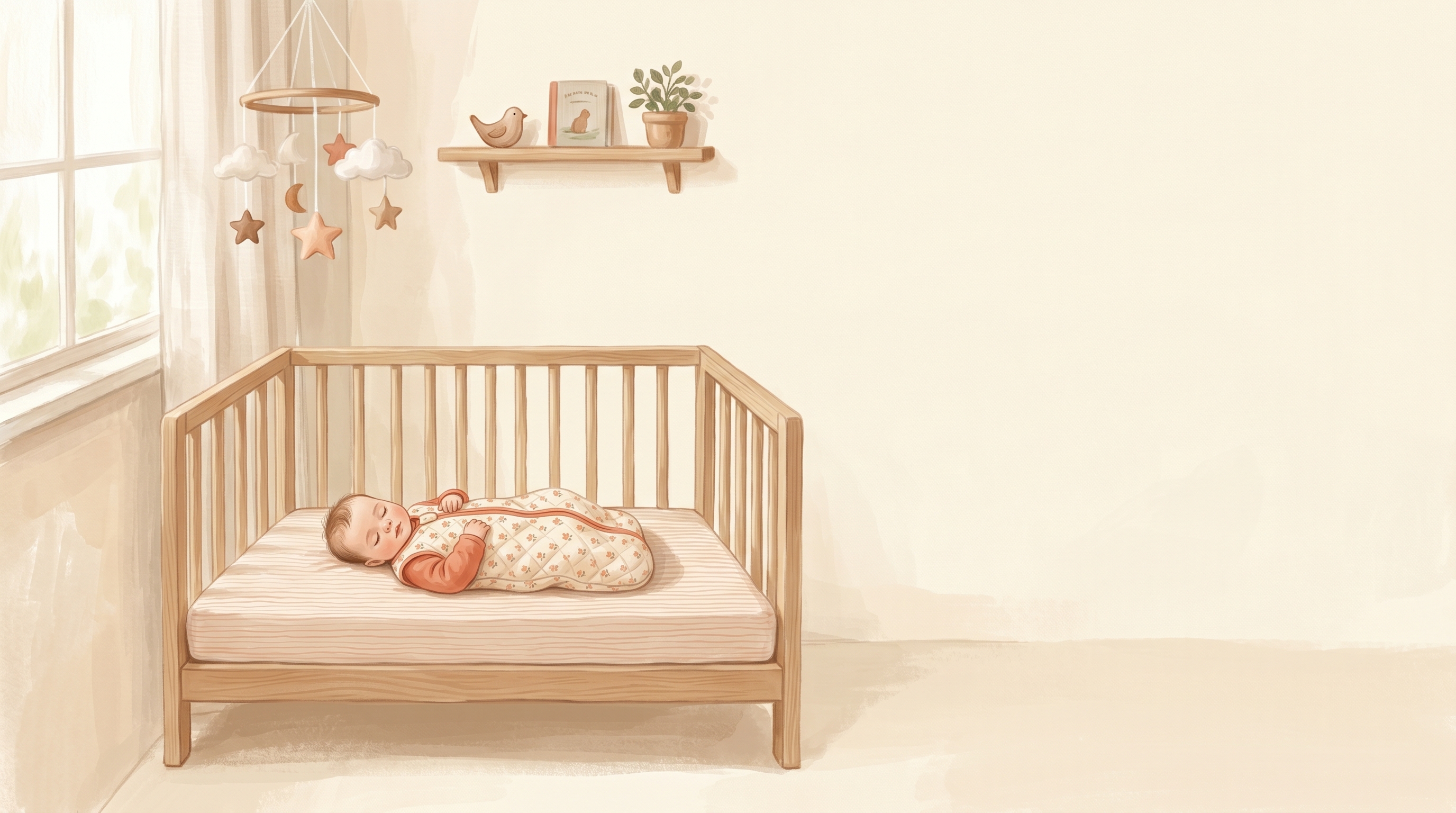
At three months, your baby is just starting to find a rhythm — but "schedule" is a generous word. Think of this as a flexible daily shape, not a timetable to hit to the minute. Some days will follow it beautifully; others won't, and both are normal.
How much sleep at 3 months?
The American Academy of Sleep Medicine's recommendation for infants 4–12 months is 12–16 hours per 24 hours, including naps — and 3-month-olds sit just below that, typically around 14–17 hours total. (AASM / AAP-endorsed sleep duration recommendations) Most of that is still broken into chunks across day and night.
What's changing now: night sleep is starting to consolidate into longer stretches, and naps are becoming a little more predictable — though a true set nap schedule usually doesn't lock in until closer to 4–6 months.
Wake windows are your real tool
At this age, watching how long your baby can comfortably stay awake works better than clock-watching. Around 3 months, that's roughly 75–120 minutes between sleeps. Catching the early tired signs (staring off, fussing, rubbing eyes) before the overtired meltdown is the whole game.
A sample day (adjust freely)
- 7:00 — Wake + feed
- 8:15–9:45 — Nap 1 (after ~75–90 min awake)
- Feed on waking, play
- 11:15–12:45 — Nap 2
- Feed, play
- 2:15–3:30 — Nap 3
- Feed, play
- 4:45–5:15 — Short catnap (common at this age)
- 6:30 — Bedtime routine + feed
- 7:00 — Bed
- Overnight — 1–3 feeds is normal at 3 months
Three to four naps a day is typical now. If a nap is short, don't force it — just shorten the next wake window a touch.
What's normal (so you don't worry)
- Still waking to feed at night — many 3-month-olds genuinely need it.
- Short naps (30–45 minutes) as sleep cycles mature.
- A "witching hour" of evening fussiness.
- Day-to-day variation. A rigid schedule at this age usually creates more stress than sleep.
Gentle ways to support the rhythm
- A consistent, short bedtime routine (see our bedtime-routine guide).
- Full daytime feeds to push more calories into daylight hours.
- A dark room and white noise for naps and night.
- Practising "drowsy but awake" sometimes — useful ahead of the 4-month regression.
Based on AASM/AAP sleep-duration guidance. General education, not medical advice — your pediatrician tracks whether your baby's sleep and growth are on track for them.
---
Wermom turns wake windows and nap times into a clear daily picture so you can stop doing the mental math. [See how Wermom works →]
Get the Wermom app — freeFrequently asked questions
My 3-month-old won't nap longer than 30 minutes — is that bad?
No. Short naps are extremely common as sleep cycles develop. Total sleep across the day matters more than any single nap.
Should my baby sleep through the night by 3 months?
Not necessarily. Many babies this age still need night feeds; longer stretches come with time and vary a lot.
How many naps at 3 months?
Usually 3–4, including a short late-afternoon catnap.